
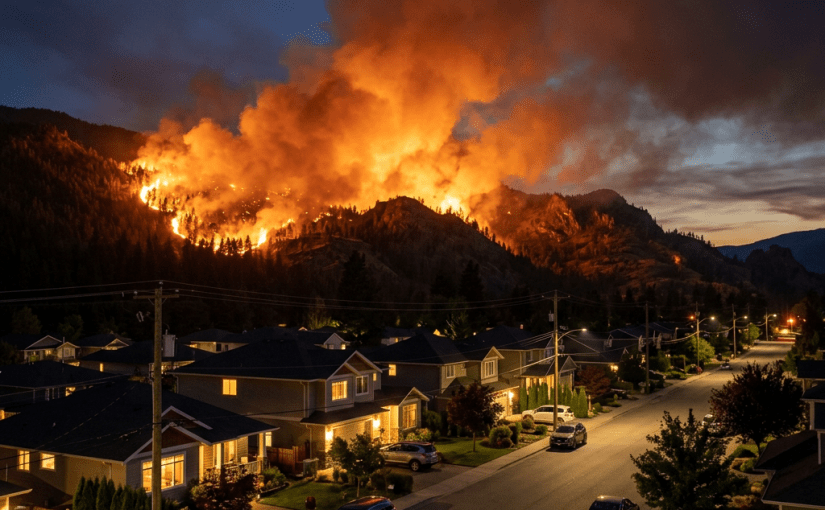
Washington Is Burning. Here’s What Every Arizona Homeowner Should Know Before a Wildfire Happens.
As we watch communities burn across Washington State, many Arizona homeowners are asking themselves one question:
Could this happen here?
It could.
Arizona has experienced destructive wildfires in places like Flagstaff, Prescott, Payson, Greer, and throughout the White Mountains. Even if you live in Phoenix, Scottsdale, or elsewhere in the Valley, you’re not immune. Smoke and ash can travel for miles, affecting homes that were never directly threatened by the flames.
The biggest mistake many homeowners make isn’t failing to buy homeowners insurance.
It’s waiting until after a wildfire to find out what their policy actually covers.
If a wildfire affected your home tomorrow, would you know what to do? Would you know what your policy covers? Would you know whether you have enough insurance to rebuild your home at today’s construction costs?
Those aren’t questions most people think about until they’re standing in front of a damaged home.
Many homeowners assume that once they report a claim, the insurance company will simply take care of everything.
In many cases, homeowners insurance provides coverage for wildfire damage. But every policy is different. What your insurance company pays for depends on what your policy says and how the damage is documented.
One question we hear often is, “What if my house doesn’t burn down?”
That’s a great question because many wildfire claims involve homes that are still standing.
Imagine returning home after an evacuation. At first, you’re relieved because your house is still there. Then you notice the smell of smoke. After a closer inspection, you discover smoke and ash inside the attic, air conditioning system, insulation, furniture, clothing, and electronics.
Suddenly, you have a significant insurance claim even though your home never caught fire.
Over the years, we’ve seen Arizona homes miles from a wildfire experience smoke contamination like this. One thing we’ve learned after handling property insurance claims for decades is that some of the biggest problems aren’t the damage you can see. They’re the damage hidden inside insulation, attic spaces, air conditioning systems, and other areas of the home.
Another question homeowners ask is, “Where am I supposed to stay if I can’t live in my house?”
Many homeowners policies include coverage that may help pay for a hotel, rental home, and some additional living expenses while your home is being repaired. Insurance companies often call this Additional Living Expense, or ALE, coverage. Understanding these benefits before you need them can make an already stressful situation a little easier.
People also assume the insurance company’s first inspection settles the claim.
It doesn’t.
The first inspection often shapes everything that happens next. If damage isn’t identified or documented early, it can be more difficult to include it later. As repairs begin, contractors sometimes discover hidden smoke damage or other issues that weren’t visible during the initial inspection.
Another question we hear is whether homeowners have to use the contractor recommended by the insurance company.
In most cases, the answer is no. You generally have the right to choose your own contractor. Before signing any agreement, make sure you understand what work will be performed and ask questions if additional damage is discovered.
One mistake we see after almost every major wildfire is people cleaning up too quickly.
Once local officials say it’s safe to return, take photographs before throwing damaged items away or beginning major cleanup. Smoke, soot, ash, and damaged belongings can become important evidence supporting your insurance claim. Once those items are gone, it may be much harder to show the full extent of your loss.
Another concern many homeowners have is whether their insurance will be enough to rebuild.
Rebuilding a home costs much more today than it did just a few years ago. If your insurance coverage hasn’t kept pace with today’s construction costs, you could end up paying part of the rebuilding costs yourself. That’s why reviewing your policy before a loss is so important.
A wildfire claim is about much more than repairing walls and replacing a roof. It may involve cleaning or replacing smoke-damaged belongings, creating a detailed inventory of everything that was damaged, reviewing repair estimates, tracking hotel and meal expenses, and understanding exactly what your insurance policy provides.
Finally, people often ask us when they should hire a public adjuster.
Many believe they should wait until they disagree with the insurance company.
Most homeowners don’t realize they can hire a licensed public adjuster before the insurance company even inspects the property. The first inspection often becomes the foundation of the claim. Decisions are being made about what was damaged, what can be repaired, and what the claim may be worth. Having someone represent your interests from the beginning can help ensure the damage is thoroughly documented before those decisions are made.
A public adjuster is a licensed insurance professional who works for you, not the insurance company. Their job is to understand your policy, document the damage, prepare repair estimates, assist with personal property inventories, and negotiate with the insurance company on your behalf.
Not every insurance claim requires a public adjuster, and some claims move smoothly from beginning to end. But every Arizona homeowner should know they have the right to hire one if they want someone representing their interests throughout the claims process.
As wildfires continue to threaten communities across the West, now is the time to ask yourself a few simple questions.
Would my insurance pay enough to rebuild my home today?
Would it help pay for a hotel if I couldn’t live in my house?
Would smoke damage be covered if my home never caught fire?
Do I know who I would call besides my insurance company if I needed help?
Those are questions worth answering before a wildfire, not after one.
At AJR Public Adjusters, Bruce Horowitz has more than 38 years of property insurance claims experience, and AJR has represented Arizona policyholders for more than 13 years. We work exclusively for property owners, never insurance companies.
Wildfires don’t give homeowners time to prepare after they start.
The time to understand your insurance policy is before you ever need it.
If that day comes, remember that the insurance company isn’t the only professional you can call. You have the right to have someone representing your interests from the very beginning.
About the Author
This article was written by Stacy Horowitz, co-owner of AJR Public Adjusters. Stacy works closely with Arizona property owners throughout the insurance claims process and is responsible for AJR’s consumer education and outreach. Her goal is to help homeowners and business owners better understand property insurance claims so they can make informed decisions before and during a loss.
Disclaimer: This article is provided for general educational and informational purposes only. It is not legal advice, insurance advice, or a substitute for reviewing your individual insurance policy. Every insurance policy and every property loss is different. Coverage depends on the specific language of your policy and the facts of your claim. If your home or business has been damaged, consider consulting a qualified professional to discuss your specific situation.

