Why Two Estimates for the Same Insurance Claim Can Be Thousands of Dollars Apart

Why the scope of damage matters just as much as the price of repairs

For example, imagine your home suffers significant water damage.

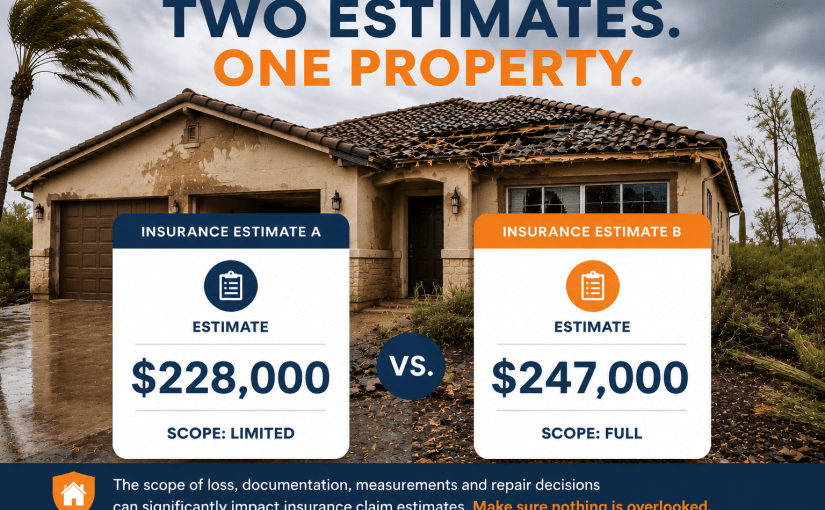
One estimate says the repairs will cost $228,000.

Another says $247,000.

That is almost a $20,000 difference for what looks like the same loss.

Most homeowners would naturally wonder how two people could look at the same property and come up with numbers that far apart.

The answer is often not simply the price of labor or materials.

It may be what each person believes is necessary to complete the repairs.

In insurance claims, that is often referred to as the scope of loss. In plain English, it is the detailed list of work needed to repair the damage.

Here is a clear description of Scope of Loss from United Policyholders (UP), a non-profit 501(c)(3) whose mission is to be a trustworthy and useful information resource and a respected voice for consumers of all types of insurance across the United States. They don’t sell insurance or take money from insurance companies. They give you the straight scoop….Guide you on buying insurance and navigating claims…Fight for your rights.

And that scope of loss list matters just as much as the prices attached to it.

Ideally, you shouldn’t have to get to the point where you’re trying to figure out why two estimates are so far apart. Understanding how estimates are built also helps explain why we believe a public adjuster can be most helpful when involved from the beginning.

Start With the Work, Not the Number

Take a water-damaged kitchen.

You may walk in and immediately see wet flooring and damaged drywall. But repairing that kitchen may involve much more than what you can see.

Are the cabinets damaged? Does the countertop need to be removed to work on them? Is there damage behind the cabinets? Does insulation need to be replaced? Do appliances have to be disconnected and moved?

And once damaged materials are removed, what has to be done to put everything back together?

Those questions all affect the estimate.

So when one estimate is $228,000 and another is $247,000, looking only at the totals does not tell you very much.

The better question is:

Are both estimates actually including the same work?

A Difference in Scope Can Create a Big Difference in Price

Suppose one estimate includes replacing 2500 square feet of flooring and another includes 2900 square feet.

Even if both use exactly the same price per square foot, the totals will be very different.

That is not really a disagreement about the price of flooring. It is a disagreement about how much flooring needs to be replaced.

The same thing can happen with drywall, paint, cabinets, insulation, trim, roofing and other repairs.

The differences can add up quickly.

The Repair May Involve More Than What Was Damaged

If water damaged drywall behind built-in kitchen cabinets, you cannot repair the wall without getting to it. That may mean removing cabinets or a countertop, repairing the wall and then putting everything back.

The same thing can happen when plumbing inside a wall needs to be accessed. The wall may have to be opened and later repaired, textured and painted.

There can also be differences over whether something should be repaired or replaced.

One person may believe part of a cabinet system can be repaired. Another may believe more extensive work is necessary. Similar questions can arise with flooring, roofing, countertops, doors, trim and other materials.

These decisions can make a significant difference in the final estimate.

Small Things and Measurements Matter Too

Property repairs involve many individual steps.

Furniture may need to be moved. Appliances may need to be disconnected and reconnected. Baseboards may need to come off and go back on. Fixtures may need to be removed and reset. Areas that aren’t being repaired may need protection. Debris needs to be removed.

One missing item may not change an estimate very much. A number of smaller items can.

Measurements matter too.

One estimate may show 1600 square feet of flooring while another shows 1725. Room dimensions, roof measurements, and linear feet of trim can all differ.

Sometimes the issue isn’t what something costs.

It’s what is being included in the first place.

Not All Damage Is Visible Right Away

You may not be able to see the full extent of property damage during the first inspection.

Water can travel underneath flooring, behind cabinets and inside walls. Sometimes additional damage isn’t discovered until materials are removed.

An estimate is based on the information available at the time it is prepared. If additional damage or necessary work is discovered later, the scope and estimate may need to be updated.

This is one reason documentation from the beginning is so important.

Photographs, video, measurements and detailed records can help preserve what the property looked like before conditions change.

Of course, necessary steps to protect the property from further damage should not be delayed simply for documentation. The point is to document what you reasonably can while also taking appropriate steps to protect the property.

So Which Estimate Is Correct?

The higher estimate is not automatically right.

The lower estimate is not automatically right either.

One may include more necessary work. Additional information may be needed. Or two experienced people may simply disagree about what repairs are required.

What matters is understanding the reason for the difference.

If you ever find yourself looking at two very different estimates, understanding what is behind the numbers can help explain the difference.

Are the same areas included? Are the measurements the same? What is being repaired and what is being replaced? What has to be removed to reach the damage? What has to be put back afterward? Is work included in one estimate that doesn’t appear in the other?

You may discover that the two estimates aren’t actually estimating the same job.

But ideally, we believe the scope of the loss should be carefully developed and documented from the beginning rather than waiting until there are two very different estimates and trying to determine why.

Getting the Scope Right From the Beginning Matters

At AJR Public Adjusters, we would much rather see a significant property loss at the beginning than be called months later when conditions have changed and everyone is trying to figure out why the estimates are so different.

The property itself is where we want to start.

When we’re involved early, we can inspect the damage, photograph and measure it, review the policy, document the loss and develop a detailed scope and estimate based on our inspection.

We want to start with the property, not someone else’s number.

Our preference isn’t to come into a claim after the fact and simply compare our number with someone else’s. We would rather have the opportunity to inspect and document the loss ourselves from the beginning.

Our job is to document the damage, develop a detailed scope and estimate, and properly present the claim to the insurance company based on the policy.

Why Experience Matters From the Start

Bruce Horowitz, has been adjusting property insurance claims for more than 38 years.

Experience does not change the damage. It changes what you know to look for.

And experience doesn’t mean automatically including more. It means knowing what questions to ask and what details need to be considered.

A homeowner may walk into a damaged kitchen and see wet flooring and damaged cabinets.

An experienced adjuster may also be thinking about what is underneath the flooring, what is behind the cabinets, what needs to be removed, what has to be disconnected and what will have to be put back when repairs are finished.

Those questions are much easier to address while the conditions can still be observed and documented than months later after the property has changed and repairs have begun.

That is why we encourage property owners to consider whether they want professional representation at the beginning of a significant property loss.

You do not need to wait for the insurance company to prepare its estimate.

You do not need to wait until you disagree with that estimate.

And you do not need to wait until the claim becomes frustrating.

As early as possible, before conditions change and the claim gets too far underway, that is the time to decide whether you want someone representing your interests in the adjustment of the loss.

If you’re considering hiring a public adjuster, the beginning of the claim is the best time to make that decision.

AJR Public Adjusters offers an initial consultation at no charge. We can discuss what happened and whether having us involved from the start makes sense.

AJR Public Adjusters
602-795-5227
publicadjusteraz.com

About the Author

Stacy K. Horowitz is co-owner and manager of AJR Public Adjusters, LLC, which she operates with her husband, Bruce L. Horowitz. Bruce has more than 38 years of property adjusting experience, and AJR has represented Arizona property owners for more than 13 years.

Stacy writes about property insurance claims to help Arizona homeowners and business owners better understand a process most people know very little about until they experience a loss themselves.

This article is for general educational and informational purposes only. It is not legal or insurance coverage advice and does not guarantee coverage or the outcome of a claim. Every insurance policy and claim is different.
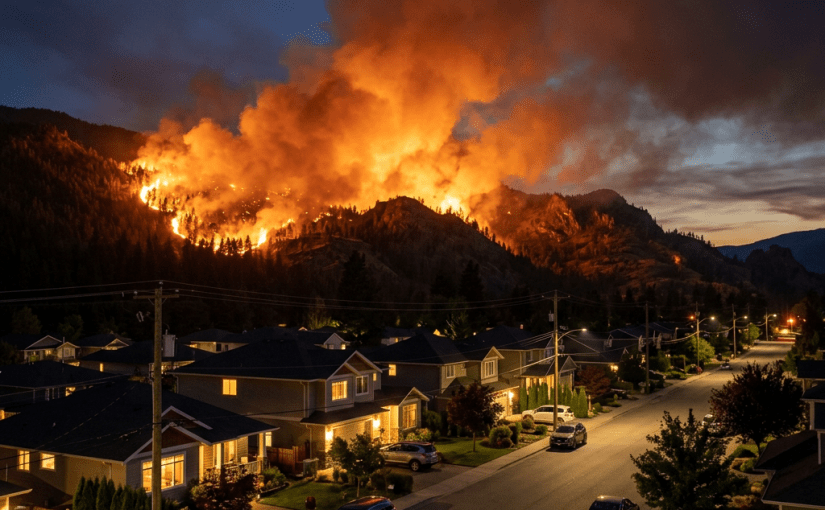
Arizona Wildfire Insurance: What Homeowners Need to Know

Washington Is Burning. Here’s What Every Arizona Homeowner Should Know Before a Wildfire Happens.

As we watch communities burn across Washington State, many Arizona homeowners are asking themselves one question:

Could this happen here?

It could.

Arizona has experienced destructive wildfires in places like Flagstaff, Prescott, Payson, Greer, and throughout the White Mountains. Even if you live in Phoenix, Scottsdale, or elsewhere in the Valley, you’re not immune. Smoke and ash can travel for miles, affecting homes that were never directly threatened by the flames.

The biggest mistake many homeowners make isn’t failing to buy homeowners insurance.

It’s waiting until after a wildfire to find out what their policy actually covers.

If a wildfire affected your home tomorrow, would you know what to do? Would you know what your policy covers? Would you know whether you have enough insurance to rebuild your home at today’s construction costs?

Those aren’t questions most people think about until they’re standing in front of a damaged home.

Many homeowners assume that once they report a claim, the insurance company will simply take care of everything.

In many cases, homeowners insurance provides coverage for wildfire damage. But every policy is different. What your insurance company pays for depends on what your policy says and how the damage is documented.

One question we hear often is, “What if my house doesn’t burn down?”

That’s a great question because many wildfire claims involve homes that are still standing.

Imagine returning home after an evacuation. At first, you’re relieved because your house is still there. Then you notice the smell of smoke. After a closer inspection, you discover smoke and ash inside the attic, air conditioning system, insulation, furniture, clothing, and electronics.

Suddenly, you have a significant insurance claim even though your home never caught fire.

Over the years, we’ve seen Arizona homes miles from a wildfire experience smoke contamination like this. One thing we’ve learned after handling property insurance claims for decades is that some of the biggest problems aren’t the damage you can see. They’re the damage hidden inside insulation, attic spaces, air conditioning systems, and other areas of the home.

Another question homeowners ask is, “Where am I supposed to stay if I can’t live in my house?”

Many homeowners policies include coverage that may help pay for a hotel, rental home, and some additional living expenses while your home is being repaired. Insurance companies often call this Additional Living Expense, or ALE, coverage. Understanding these benefits before you need them can make an already stressful situation a little easier.

People also assume the insurance company’s first inspection settles the claim.

It doesn’t.

The first inspection often shapes everything that happens next. If damage isn’t identified or documented early, it can be more difficult to include it later. As repairs begin, contractors sometimes discover hidden smoke damage or other issues that weren’t visible during the initial inspection.

Another question we hear is whether homeowners have to use the contractor recommended by the insurance company.

In most cases, the answer is no. You generally have the right to choose your own contractor. Before signing any agreement, make sure you understand what work will be performed and ask questions if additional damage is discovered.

One mistake we see after almost every major wildfire is people cleaning up too quickly.

Once local officials say it’s safe to return, take photographs before throwing damaged items away or beginning major cleanup. Smoke, soot, ash, and damaged belongings can become important evidence supporting your insurance claim. Once those items are gone, it may be much harder to show the full extent of your loss.

Another concern many homeowners have is whether their insurance will be enough to rebuild.

Rebuilding a home costs much more today than it did just a few years ago. If your insurance coverage hasn’t kept pace with today’s construction costs, you could end up paying part of the rebuilding costs yourself. That’s why reviewing your policy before a loss is so important.

A wildfire claim is about much more than repairing walls and replacing a roof. It may involve cleaning or replacing smoke-damaged belongings, creating a detailed inventory of everything that was damaged, reviewing repair estimates, tracking hotel and meal expenses, and understanding exactly what your insurance policy provides.

Finally, people often ask us when they should hire a public adjuster.

Many believe they should wait until they disagree with the insurance company.

Most homeowners don’t realize they can hire a licensed public adjuster before the insurance company even inspects the property. The first inspection often becomes the foundation of the claim. Decisions are being made about what was damaged, what can be repaired, and what the claim may be worth. Having someone represent your interests from the beginning can help ensure the damage is thoroughly documented before those decisions are made.

A public adjuster is a licensed insurance professional who works for you, not the insurance company. Their job is to understand your policy, document the damage, prepare repair estimates, assist with personal property inventories, and negotiate with the insurance company on your behalf.

Not every insurance claim requires a public adjuster, and some claims move smoothly from beginning to end. But every Arizona homeowner should know they have the right to hire one if they want someone representing their interests throughout the claims process.

As wildfires continue to threaten communities across the West, now is the time to ask yourself a few simple questions.

Would my insurance pay enough to rebuild my home today?

Would it help pay for a hotel if I couldn’t live in my house?

Would smoke damage be covered if my home never caught fire?

Do I know who I would call besides my insurance company if I needed help?

Those are questions worth answering before a wildfire, not after one.

At AJR Public Adjusters, Bruce Horowitz has more than 38 years of property insurance claims experience, and AJR has represented Arizona policyholders for more than 13 years. We work exclusively for property owners, never insurance companies.

Wildfires don’t give homeowners time to prepare after they start.

The time to understand your insurance policy is before you ever need it.

If that day comes, remember that the insurance company isn’t the only professional you can call. You have the right to have someone representing your interests from the very beginning.

About the Author

This article was written by Stacy Horowitz, co-owner of AJR Public Adjusters. Stacy works closely with Arizona property owners throughout the insurance claims process and is responsible for AJR’s consumer education and outreach. Her goal is to help homeowners and business owners better understand property insurance claims so they can make informed decisions before and during a loss.

Disclaimer: This article is provided for general educational and informational purposes only. It is not legal advice, insurance advice, or a substitute for reviewing your individual insurance policy. Every insurance policy and every property loss is different. Coverage depends on the specific language of your policy and the facts of your claim. If your home or business has been damaged, consider consulting a qualified professional to discuss your specific situation.

Essential Steps After Arizona Monsoon Damage

Arizona Monsoon Damage Claims: What to Do Next

Arizona monsoons can bring strong winds, hail, lightning, blowing dust, and heavy rain. In a short time, a storm can damage a roof, break windows, knock down trees, and send water into a home or business.

What you do after the storm can affect your insurance claim. AJR Public Adjusters helps Arizona property owners document their damage, understand the claim process, and communicate with the insurance company.

What to Do After Monsoon Damage

Safety comes first. Stay away from downed power lines, unstable trees, damaged roofs, and standing water near electrical systems.

When it is safe, take photographs and videos of the damage. Include wide views of each affected area and close-ups of damaged roofing, ceilings, walls, flooring, windows, furniture, and personal property.

Record the date and approximate time of the storm. Save weather alerts and local storm reports when possible.

Contact your insurance company promptly and ask for written confirmation of your claim number. Take reasonable steps to prevent further damage, such as covering a roof opening, boarding a broken window, or arranging professional water removal and drying.

Keep every receipt, invoice, estimate, photograph, moisture report, and insurance communication. Do not throw away damaged materials or personal property until they have been photographed and documented.

Is Arizona Monsoon Damage Covered by Insurance?

Coverage depends on what caused the damage and what your policy says.

Homeowners insurance may cover damage caused by wind, hail, lightning, falling objects, and rain entering through an opening created by a covered storm event.

Surface flooding is different. Water that rises from the ground or flows across the property is generally not covered by a standard homeowner’s policy. That type of loss usually requires separate flood insurance.

The cause of the damage matters. Rain entering through a roof opening created by strong winds may be treated differently from water entering because of an old leak or worn roofing.

Policies may also include special deductibles or limits for wind, hail, mold, trees, fences, detached structures, and personal property. Review the policy carefully before assuming an item is covered or excluded.

Monsoon Damage Is Not Always Easy to See

The most obvious damage may be only part of the loss.

Wind can lift or shift roof tiles without completely removing them. Water may travel beneath the roof, behind walls, under flooring, or through insulation. Moisture can also reach rooms far from where the water first entered.

A complete inspection may need to consider the roof, underlayment, flashing, ceilings, drywall, insulation, flooring, cabinets, electrical components, HVAC equipment, windows, doors, exterior structures, and personal property.

If the home cannot be safely occupied, the policy may also provide additional living-expense coverage for necessary hotel, meal, storage, or moving costs. Commercial policies may include business income coverage when storm damage disrupts normal operations.

Do You Have to Use the Insurance Company’s Contractor?

Your insurance company may recommend a roofing, mitigation, or restoration company. The recommendation may be convenient, but ask whether your policy requires you to use that provider.

Before signing a work authorization, understand what services are included, who must pay charges the insurer does not approve, and whether the agreement covers emergency work, permanent repairs, or both.

A contractor repairs the property. A public adjuster helps the policyholder prepare and negotiate the insurance claim. These are different roles.

When Can a Public Adjuster Help?

The insurance company’s adjuster evaluates the claim for the insurer. A public adjuster represents the policyholder.

Hiring a public adjuster can be especially valuable when multiple areas of the property are damaged, wind and water contributed to the loss, hidden moisture may be present, or the insurer’s estimate may not reflect the full extent of the damage.

The best time to hire a public adjuster is often at the beginning of the claim, before cleanup and repairs alter the evidence and before the insurance company establishes its initial position regarding the cause, scope, and value of the covered damage. Early involvement allows the public adjuster to document the loss thoroughly and present a complete, well-supported claim from the outset.

A public adjuster can also help when the property owner simply does not have the time or experience to manage the process alone.

A public adjuster reviews the insurance policy, inspects and documents the damage, prepares a detailed estimate, organizes supporting records, communicates with the insurance company, and negotiates the covered claim on the policyholder’s behalf.

No public adjuster can guarantee coverage or a specific payment. The goal is to present a complete, well-supported claim based on the policy and documented damage.

How AJR Public Adjusters Can Help

AJR Public Adjusters represents homeowners, landlords, business owners, and other Arizona policyholders—not the insurance company.

AJR helps clients understand their policies, document the full extent of the damage, review insurance estimates, organize claim records, and communicate with the insurer. AJR can also assist with personal property damage, additional living expenses, and business interruption claims when those coverages apply.

AJR handles claims involving monsoon and haboob damage, fire, wind, hail, roof damage, water intrusion, lightning, mold, fallen objects, and other types of covered property loss.

Based in Phoenix, AJR serves clients throughout Arizona, including Scottsdale, Mesa, Chandler, Glendale, Tempe, Tucson, Flagstaff, Cave Creek, and Fountain Hills.

Why Contact AJR Early?

Monsoon-damage evidence can change quickly. Water dries, debris is removed, temporary repairs cover damaged areas, and contractors may begin removing building materials.

Contacting AJR early allows the circumstances of the damage and the claim to be reviewed while more evidence is still available. You do not have to wait for the insurance company to deny or underpay the claim before requesting help.

Request a Free Consultation

If an Arizona monsoon has damaged your home, rental property, or commercial building, AJR Public Adjusters can review your situation and explain whether public-adjuster representation makes sense.

AJR Public Adjusters
21001 North Tatum Boulevard, Suite 1630-483
Phoenix, Arizona 85050

Phone: (602) 795-5227
Toll-free: (855) 454-0247
Website: https://publicadjusteraz.com/

Bruce L. Horowitz, Manager
Arizona License No. 622419

Contact AJR Public Adjusters for a free property insurance claim consultation.

This article provides general information and is not legal advice, a coverage opinion, or a guarantee of insurance payment. Coverage and claim outcomes depend on the policy and the facts of each loss.

When a Water Loss Happens While You’re Away: What This 5-Star Review Gets Right

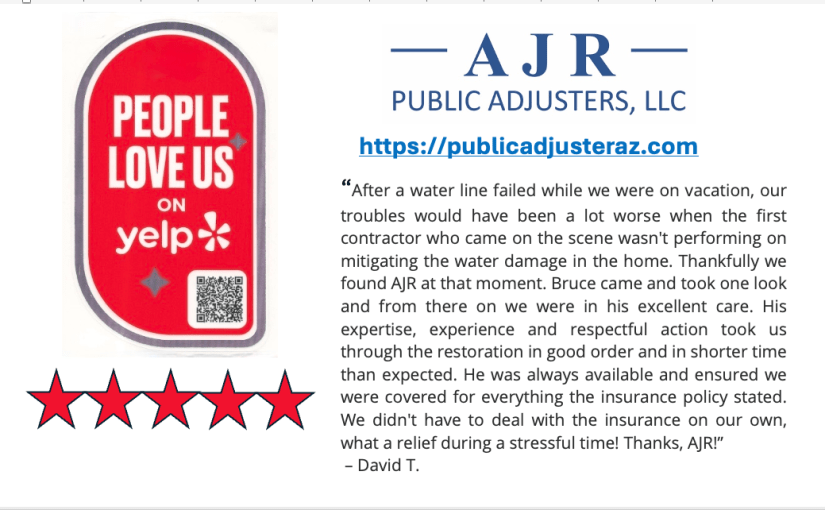
A recent review from David on Yelp says a lot about what can go wrong with a property claim and what can go right when it’s handled correctly.

“After a water line failed while we were on vacation, our troubles would have been a lot worse when the first contractor who came on the scene wasn’t performing on mitigating the water damage in the home. Thankfully we found AJR at that moment. Bruce came and took one look and from there on we were in his excellent care…”

Water losses are one of the most common claims in Arizona. They also move fast. Damage spreads behind walls, under flooring, and into cabinets before you even realize it. If the initial mitigation is not done right, the cost and scope can grow quickly.

That’s where most problems start.

What went wrong at the beginning

In David’s case, the first contractor was not doing proper mitigation. This happens more than people think.

Common issues we see:

  • Equipment not set correctly or not enough equipment used
  • Moisture not fully tracked behind walls and cabinets
  • Drying stopped too early
  • Poor documentation of what was damaged and why

When this happens, two problems show up. First, the property is not fully dried. Second, the insurance company may not get a clear picture of the damage.

Both affect how the claim gets paid.

What changed when AJR got involved

David mentioned that Bruce came out, assessed the situation, and took over from there.

That step matters.

At AJR, we focus on a few things right away:

  • Inspection and documentation: We look at the loss as a whole. Not just what is visible. We document all affected areas with photos, notes, and measurements so nothing is missed.
  • Review of mitigation work: We assess whether the drying process was done correctly and what still needs to be addressed.
  • Policy review: We go through the insurance policy and apply it to the actual damage. This is where many claims fall short. Coverage is there, but it is not applied correctly.
  • Clear scope of work: We build out what needs to be repaired and why. This becomes the foundation of the claim.
  • Communication with the insurance company: We handle the back-and-forth. The goal is to keep things moving while making sure the claim is fully documented.

David also pointed out something important. He did not have to deal with the insurance company on his own. That alone removes a lot of stress during an already difficult situation.

Why documentation makes or breaks a claim

You’ll notice David said Bruce made sure they were covered for everything the policy stated.

That does not happen by accident.

Insurance companies base payments on what is documented. If something is missed, it usually does not get paid.

Good documentation includes:

  • Photos before cleanup
  • Detailed estimates
  • Moisture readings and drying logs
  • A full list of affected materials and contents

Without that, parts of the claim can be overlooked or undervalued.

Timing matters more than people think

The best time to bring in a public adjuster is early. Before decisions are made that affect the claim.

That said, many people call after things have already started. Like David did.

If you are already in the middle of a claim:

  • There is no guarantee we can step in
  • But we are willing to look at where things stand
  • We can give clear direction on next steps, whether we get involved or not

Sometimes small changes in how a claim is handled can make a big difference in the outcome.

What a public adjuster actually does

A lot of property owners are not sure what a public adjuster does.

Simple answer. We represent you, not the insurance company.

Here’s what that looks like in a real claim:

  • We inspect and document the damage correctly
  • We prepare the estimate and support it with detail
  • We apply your policy to the damage
  • We communicate with the insurance company
  • We keep you informed the entire time

You stay involved. You are copied on communication. You understand what is happening and why.

Situations where this matters most

We see the biggest impact in claims involving:

  • Water damage from broken pipes or appliance failures
  • Fire and smoke damage
  • Storm damage
  • Claims where mitigation or repairs were not handled properly at the start

In these cases, missing something early can affect the entire claim.

Keywords people search when this happens

If you’re dealing with a loss, you’ve likely searched things like:

  • water damage insurance claim help
  • public adjuster Phoenix Arizona
  • how to handle a homeowners insurance claim
  • water leak damage insurance coverage
  • help with insurance claim after water damage

Those searches usually come after the stress has already started.

Final thought

David’s review highlights something we see often. The situation started off wrong, but it was caught in time and handled correctly.

Not every claim starts clean. What matters is how it’s handled once the problem is recognized.

If you own a property and something happens, slow down and make sure the damage is documented the right way from the beginning. If you’re already in the middle of it, it’s still worth getting another set of eyes on the claim.

We appreciate David taking the time to share his experience and trusting AJR to step in when it mattered.

How AJR Simplifies Insurance Claims After Storms

Unprecedented Storms Stress the Claims Process and How AJR Helps

In recent months, Phoenix and the greater Arizona region have seen storms unlike anything in recent memory. One event dropped over 3 inches of rain in the metro area by October 12, the heaviest for that period in years (azwater.gov).

With so much heavy rain, strong winds, and rapid-onset damage, home and business owners across Arizona are facing a surge of claims. The volume and complexity are putting pressure on everyone: homeowners, insurers, and public adjusters like us at AJR Public Insurance Adjusters.

Why These Storms Are Especially Difficult

• The heavy rainfall and wind create multiple types of damage at once. Flash flooding, roof damage, wind-blown debris, and dust storms all hit together.
• Insurers are overwhelmed with claims, which causes delays in response, inspections, and payouts.
• Many homeowners don’t have records of their property’s condition before the storm. That slows the claim process.
• Adjusters sent by insurers may not be familiar with the unique damage caused by Arizona storms, so claims may be undervalued.
• The longer a claim drags out, the more frustrated people become.

What AJR Does to Help


Fast claim evaluations: We review your claim quickly to evaluate damage while it’s fresh. We then determine the best course of action to move forward with representation from AJR
Detailed documentation: We help you pull together all your paperwork, policy, receipts, depreciation info, and more to build a strong claim.
Localized knowledge: We know how Arizona storms work. We can explain to insurers how dust, rain, hail, and wind combined to cause the damage.
• We fight for you: Insurers often push back, calling it “wear and tear” or “maintenance.” We push back harder. You don’t pay us up front; our fee is due only when the claim is settled and when checks are issued.
Clear communication: We explain everything in plain language, so you know what’s happening at each step.
We stick around: Once you’re an AJR client, we stay available for anything related to the claim we helped with. Whether new issues arise or questions come up months later, we’re here to help you through it.

What You Should Do Now

If a recent storm damaged your property, here’s what to do:
1. Take lots of photos and videos.
2. Gather your insurance policy and any receipts for repairs or valuables.
3. Call a public adjuster early. The sooner we’re involved, the better your outcome will be.

Why Your Trust Matters

Storms like these test the whole system. When claims stall or payouts fall short, people lose trust in insurers and the process. At AJR, we take that seriously. Our job is to be there when things are hard, to represent you clearly, and to work the claim correctly. We are here to protect you and your claim, and we do it with care, experience, and urgency.

Our Reputation Is Built on Trust

At AJR, our reputation matters. We’ve built it through consistent, reliable, and responsive service during some of the most stressful moments our clients face. That’s why we’ve earned and maintained an A+ rating with the Better Business Bureau. Our website features testimonials from real clients who trusted us with their claims and were glad they did. When you work with us, you’re not just getting help with a claim—you’re choosing a team known for standing by its clients and delivering results.

Just like hiring an Accountant for an audit: Why Policyholders Turn to AJR Public Adjusters for their Property Insurance Claims

Many neighbors don’t realize that insurance company adjusters work for the insurance company—not for you.

That’s where public adjusters come in. We work for the policyholder, not the insurer.

Just like you’d hire an accountant to handle an audit, you can hire a public adjuster to handle your insurance claim. It’s a professional service you can pay for to have someone represent your interests in all claim negotiations.

Our clients often tell us they didn’t know this option existed until after struggling through the process on their own. We’re proud to share four new 5-star reviews from clients who did:

“AJR Public Adjusters are awesome and I would highly recommend them to anyone dealing with a large insurance claim.”

“Their expertise and professional knowledge were invaluable as they took the lead with my insurance company and guided me through the complexities.”

We genuinely appreciate clients who take the time to share their experience—it helps others feel confident knowing they’ll receive professional, honest, and knowledgeable help with their claim.

If you’re dealing with property damage anywhere in Arizona, call AJR Public Adjusters at 602-795-5227. You don’t have to handle it alone.

Why BBB Accreditation Is Key for Your Public Adjuster Choice

Why BBB Accreditation Matters When Choosing a Public Adjuster
Recognized by BBB Pacific Southwest – and proud of it.

We were recently featured by BBB Pacific Southwest for our ongoing commitment to professionalism and integrity in the public adjusting industry. We’re proud to share this recognition—it reinforces the values that AJR Public Adjusters has stood for since day one.

In a field where trust matters most, being BBB Accredited with an A+ rating isn’t just a badge. It’s a promise to our clients.

What BBB Accreditation Means

The Better Business Bureau isn’t a marketing platform—it’s a nonprofit organization that evaluates businesses based on clear standards of trust, transparency, and responsiveness. Accreditation means that a company not only meets those standards but actively maintains them.

To be accredited, a business must:

  • Be responsive to customer concerns
  • Honor commitments
  • Practice honesty in advertising
  • Operate with transparency

At AJR, we’re proud to meet and exceed those expectations every day.

Why Our A+ Rating Matters

Not all public adjusters operate with the same level of accountability. In fact, many companies aren’t accredited at all.

Our A+ rating with the BBB reflects:

In a highly competitive and sometimes misleading industry, we want our clients to feel confident from the first phone call to the final settlement. This rating helps give them that peace of mind.

What It Means for You as a Policyholder

When you’re dealing with an insurance loss, the last thing you need is uncertainty about who’s on your side. Choosing a BBB Accredited Public Adjuster helps ensure you’re working with someone accountable—not someone chasing storms or cutting corners.

A few things clients tell us they value most:

  • Clear, honest answers
  • Timely responses
  • An advocate who explains the process—not someone who pressures them to sign

We don’t just promise that—we back it up with action. And our BBB record proves it.

Follow Us and Stay Connected

We’re grateful for the shoutout from the BBB. You can see the original post here.

Due to account access issues, our original Instagram account,@ajrpublicadjuster, is currently locked. Please follow us on our active business account @ajrpublicadj for updates, tips, and real claim stories. If you found us through the BBB post or on our website, please leave us a comment—let us know, and we’ll follow you back.

Final Thoughts

As we shared in the BBB feature, our advice to new business owners is simple:
“Lead with truthfulness. Your word is your reputation. Listen, communicate, and always follow through.”

We’ve built our business on that belief. We’re thankful to the BBB for helping consumers identify companies that share those same values.

AJR: Phoenix’s Top Public Adjuster for Monsoon Damage Claims

Why AJR Public Adjusters Was Named Phoenix’s Top Public Adjuster—Again

As Arizona enters monsoon season, homeowners and business owners face increased risk of property damage from high winds, heavy rain, and hail. These storms can lead to roof leaks, collapsed ceilings, flooding, and other costly problems—many of which should be covered by insurance. But filing a claim and getting a fair settlement isn’t always straightforward.

That’s where AJR Public Adjusters comes in.

We’re proud to share that AJR has once again been named the Top Public Adjuster in Phoenix by Yelp. This recognition is based on consistent five-star reviews from real clients who’ve trusted us to handle complex property claims and guide them through the insurance process.

What Sets AJR Apart

  • Over 37 Years of Experience
    Bruce Horowitz brings decades of hands-on experience in public adjusting. We’ve handled thousands of claims and understand the ins and outs of insurance policies, coverage limits, and negotiation strategies.
  • We Work for You—Not the Insurance Company
    As licensed public adjusters, we only represent policyholders. Our job is to protect your interests, document the full scope of damage, and push for the maximum settlement under your policy.
  • Clear Communication
    One of the most common complaints we hear from people before they call us is that they felt left in the dark. At AJR, we believe in clear and honest updates. You’ll always know where your claim stands.
  • Local Expertise
    Monsoon-related damage is unique to this region. We live and work in Arizona, so we understand how these storms affect homes and businesses here—and how insurance carriers respond to them.
  • Free Policy & Damage Reviews
    Unsure if you have a claim? We review your full insurance policy, estimates, and damage photos at no cost. If we believe we can help, we’ll explain the next steps clearly.

If your property is damaged this monsoon season and you’re feeling overwhelmed, you’re not alone. Many policyholders come to us after struggling with denied or underpaid claims. At AJR, we take the pressure off and help you get what you’re owed.

Need help? Contact us today at 602-795-5227 or submit your documents for a complimentary review. We’re here to help you get through this—and come out stronger.

Prevent Dryer Fires: Key Maintenance Tips for Safety

Dryer Lint: A Hidden Fire Hazard You Shouldn’t Ignore

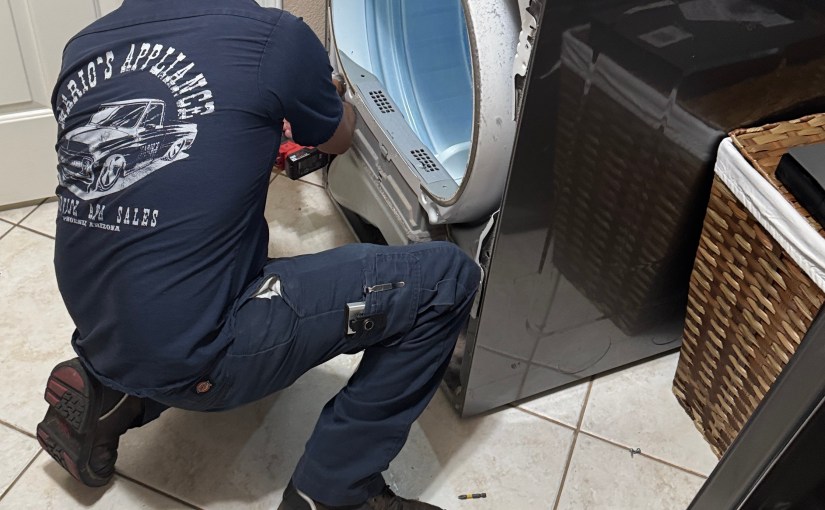
A large clump of lint rests on a tiled floor in the corner of a laundry room. This hidden buildup was removed during a professional dryer cleaning arranged by AJR Public Adjusters to highlight the serious fire risks associated with neglected dryer maintenance.
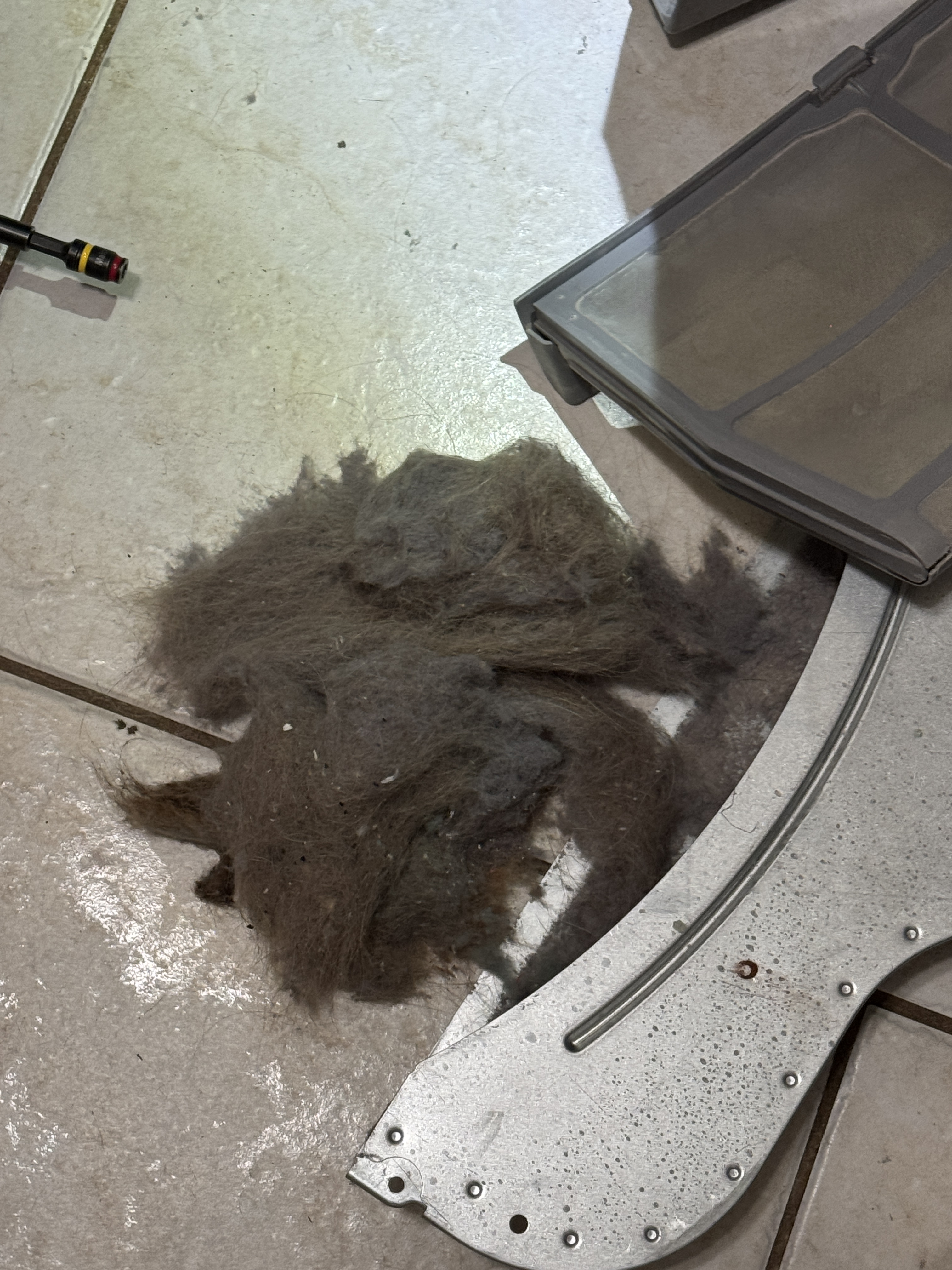
This large clump of lint was pulled from a dryer during a professional cleaning arranged by AJR Public Adjusters. It’s a powerful reminder of the hidden fire hazards that can accumulate over time without regular maintenance.

At AJR Public Adjusters, we’ve helped countless homeowners recover from devastating fire losses—and more often than you’d think, those fires started in a laundry room.

Most people are good about clearing the small lint tray after each load. But what’s often forgotten is that lint doesn’t just stop there. It builds up inside the dryer and along the dryer vent ductwork that snakes through the walls and out of your home. That hidden buildup is a real fire risk.

A large pile of lint sits on the floor next to a removed dryer panel and lint screen, collected during a professional dryer cleaning arranged by AJR Public Adjusters. The image highlights the volume of hidden lint buildup that can pose a serious fire hazard if not properly addressed.
This pile of lint was removed from inside a dryer during a cleaning coordinated by AJR Public Adjusters. It’s a clear example of how much hidden debris can accumulate over time—posing a major fire risk if not addressed through regular professional maintenance.

We’re sharing this today because we just had our own dryer serviced, and we were shocked by how much lint had accumulated. Not only did our technician pull out two large clumps like the ones shown in the photos, but we had already emptied two full Dustbuster containers of lint into the trash before taking the pictures. That’s how much had collected out of sight.

Our yearly tip: Have your dryer professionally cleaned and inspected at least once a year.

Here’s what we recommend:

  • Continue cleaning the lint tray after every load.
  • Have a professional disassemble your dryer annually to remove internal lint buildup.
  • Hire a qualified vent cleaning service to clear out the ducts that carry lint from the dryer to the outside of your home.

This isn’t just a suggestion. It’s an important safety measure. Dryer fires are preventable, and we’ve seen firsthand how much damage they can cause.

If you need a referral to someone reliable, feel free to reach out. We’re always happy to connect you with trusted professionals who do thorough, honest work.

Stay safe and stay alert. One small step now can prevent a major loss later.


AJR Public Adjusters
Serving homeowners for over 37 years, with deep roots in Arizona for the past 12.

Tips for Choosing a Public Adjuster After Arizona Storms

As we start the monsoon season here in Arizona, property owners need to stay alert. Be cautious not just of the storms themselves but also of the wave of people who show up afterward.

After a significant storm, individuals often knock on your door offering quick fixes or promising big insurance payouts. Some are trying to be helpful, but many are simply trying to drum up business. They often lack a fundamental understanding of the claims process. Promises are made that don’t hold up once insurance complications arise.

Before agreeing to work with anyone, read their reviews and look at the types of claims they’ve actually handled. If you see a pattern of “they knocked on my door,” there’s your answer. Here is a link to the AJR Reviews. You can learn more about who we are. Find out what we can do.

At AJR Public Adjusters, we do things differently. We don’t chase storms. We rely on our reputation, our A+ rating with the Better Business Bureau (BBB), and the referrals of satisfied clients. With over 35 years of industry experience, Bruce brings unmatched knowledge and results to every claim. Other firms have been in Arizona longer, but no one offers the depth of skill that Bruce does.

If you’ve suffered property damage, make sure you’re working with the right professional. AJR is here to help you get what you deserve.

Call us at 602-795-5227 or reach out here